Welcome to our comprehensive guide on house releveling cost in Kapiti! Whether you’re a homeowner noticing uneven floors or a buyer wanting to understand foundation issues, you’ve come to the right place. Here, we provide clear, detailed information about typical costs, the releveling process, key factors affecting pricing, and expert tips to help you make informed, budget-friendly decisions. Let’s get your home back on solid ground with confidence and ease!
Key Takeaways
- Typical Kapiti house releveling costs range from around $6,000–$12,000 for minor timber-piled homes through to $35,000–$70,000+ for full repiling or complex slab issues.
- Kapiti’s coastal and peat/sand soils (particularly around Paraparaumu Beach, Waikanae Beach, and Otaihanga) often increase costs due to ground improvement needs and deeper pile requirements.
- Building consent from Kapiti Coast District Council is almost always required for full repiling or structural releveling work.
- Before committing, get a geotechnical report (Scala penetrometer testing) and at least 2–3 written quotes from Licensed Building Practitioners.
- Plan ahead for an additional 10–20% contingency to cover unexpected costs like rotten bearers or hidden drainage issues discovered once work begins.
If you’ve noticed sloping floors, sticking doors, or cracks appearing around your door frames, you’re probably wondering what it will cost to get your Kapiti home back on solid ground. Foundation issues can feel overwhelming, but understanding the typical price ranges and what drives those costs puts you in a much stronger position when talking to contractors.
This go to guide breaks down everything Kapiti homeowners need to know about house releveling costs in 2026—from realistic dollar figures for different property types to the entire process of getting consents, choosing specialists, and protecting your investment.
What Is House Releveling In Kapiti & Why Costs Vary
House releveling is the process of lifting and re-supporting an existing home to correct settlement and bring floors and walls back within acceptable tolerances. In New Zealand, this work ranges from minor jack-and-pack adjustments under a few piles through to full house repiling or foundation replacement.
Here’s the crucial distinction for Kapiti homeowners: if you have any questions, contact local expert Builders Kapiti.
Learn more about home renovation costs in New Zealand to help plan your next project:
- Timber-piled homes (common in older Kapiti suburbs like Waikanae, Raumati South, and Paekakariki): These typically involve jacking sections of the house, replacing or packing existing piles, and installing new fixings and bracing.
- Concrete slab homes (common in 1980s–2000s subdivisions around Paraparaumu and Otaki): These require specialist approaches like resin injection underpinning or structural reinforcement to address settlement.
Kapiti’s coastal location creates its own challenges. Homes here are exposed to coastal winds, variable water tables, and a mix of peat, sandy silt, and gravel soils that can cause differential settlement over time. A house near Paraparaumu Beach on sandy silt faces different ground conditions than a property up towards the hills on firmer gravels.
Why no two jobs cost the same:
- Foundation type (timber piles, concrete piles, or concrete slab)
- Site access and slope
- Soil conditions and groundwater levels
- Extent of existing damage
- Previous repairs or modifications
Practical examples of the range:
- 1930s weatherboard bungalow on timber piles in Raumati: Likely a straightforward partial repile
- 1990s brick veneer on concrete slab in Otaihanga: May need specialist resin injection or underpinning
- 1960s villa on mixed pile and ring foundation in Waikanae: Could require combined pile replacement and ring beam repair
Releveling isn’t just cosmetic. It’s a structural safety issue that affects your home’s resale value, insurability, and long-term durability.
Typical House Releveling Costs In Kapiti (2026 Guide)
The following figures are realistic 2026–2027 ballpark costs for Kapiti Coast properties, assuming standard access and no extreme ground conditions. Every job is different, but these ranges give you a solid starting point for informed decisions.
Cost bands for common Kapiti scenarios:
| Work Type | Typical Cost Range | Notes |
|---|---|---|
| Minor releveling & packings on existing piles | $6,000–$12,000 | Small 90–120m² house in Paekakariki or older Waikanae streets |
| Partial repiling (20–40% of piles replaced) plus relevel | $15,000–$30,000 | 120–160m² Kapiti home with moderate settlement |
| Full repiling of standard 3-bedroom weatherboard | $30,000–$55,000 | Depends on access, height under floor, and soil around Paraparaumu/Paraparaumu Beach |
| Complex slab releveling (resin injection, underpinning) | $25,000–$70,000+ | Where dishing and voids exist on peat/sand near the coast |
Regional comparison:
- Kapiti is often slightly cheaper than central Wellington due to easier terrain and access in many areas
- However, costs can match or exceed Horowhenua for properties with high soil risk or where specialists need to travel
- Wellington-region repiling benchmarks put most full repiles between $20,000 and $50,000, which aligns closely with Kapiti experience
Investigation costs:
Small investigation-only visits (builder inspection, preliminary report) typically cost $250–$800 but can sometimes be credited back if you proceed with the work.
Important note: These prices cover foundation work only. Follow-up interior repairs like gib fixing, repainting, or adjusting joinery are additional expenses. Budget an extra 10–30% of your core releveling cost for this ancillary work.
Key Factors Affecting House Releveling Cost In Kapiti
Understanding why quotes vary so dramatically helps you make sense of the numbers. Here are the main factors that determine whether your quote comes back at $10k, $30k, or $60k+.
Foundation type:
- Older timber piles (common pre-1970s): Usually the most affordable to replace or adjust because the subfloor is accessible
- Concrete piles: More durable but can still settle; replacement requires cutting and drilling
- Concrete slab: Requires specialist ground engineering with per-injection-point or per-square-metre pricing
Timber pile replacement generally costs less per metre than specialist slab lifting or resin injection work.
Soil and groundwater conditions:
Kapiti’s soils vary significantly across the district:
- Peat and sandy silt near Paraparaumu Beach and Otaihanga: Often requires deeper piles, ground improvement, or engineered solutions
- Firmer gravels inland towards the hills: Typically simpler and more cost-effective foundation work
- High water tables and poor drainage: Increases risk of timber pile rot and adds complexity to any ground works
Properties on soft soil or unstable soil face higher costs due to engineering requirements and more materials needed for adequate support.
House size and layout:
- Larger floor areas mean more piles, more jacking points, and more time on site
- Complex footprints (L-shaped plans, multiple wings, additions) add to both labour and material costs
- A small cottage might need 20–30 piles; a large villa could require 60–80 or more
Access and height under floor:
- Low-clearance subfloors common in 1950s–1970s Kapiti bungalows can add 15–30% to labour costs
- Workers may need to crawl, excavate access trenches, or work in confined spaces
- Tight driveways or steep sections increase crane and transport costs
- Limited access can mean more manual handling instead of machinery
Extent of damage and previous repairs:
Homes previously “patched” with ad-hoc fixes often cost more to repair properly. Mixed systems (e.g., original timber piles plus some concrete piles added in the 1990s) add complexity that takes time to work through.
Council, engineering, and compliance:
Costs for Kapiti Coast District Council consents, geotech reports, and structural engineering design typically add several thousand dollars to the total cost. This isn’t optional for significant work—it’s required under New Zealand building codes.
Kapiti Council Consents, Reports & Regulatory Costs
Most full repiling or substantial releveling in Kapiti is classified as “restricted building work” under the Building Act and requires a building consent. Skipping this step creates legal headaches down the track and can affect your code compliance certificate.
When council consent is required:
- Full house repiling or significant releveling (altering or replacing foundations): Almost always needs a building consent from Kapiti Coast District Council
- Very minor packing or shimming: Might be exempt but should still be recorded and done by a qualified professional
- Any work affecting structural integrity or load paths: Requires consent
Typical regulatory cost ranges:
| Item | Typical Cost |
|---|---|
| Building consent application (straightforward repiling) | $2,000–$4,000 |
| Inspection fees (multiple visits) | Included or additional $200–$500 |
| Re-inspection charges (if work is staged) | Varies |
| Code Compliance Certificate | Part of consent process |
Engineering and geotech reports:
A Chartered Professional Engineer (CPEng) specifies pile size, spacing, and bearing capacity based on your house and ground conditions. A geotechnical engineer assesses soil to determine required pile depths.
Typical costs: $1,500–$3,500 for combined structural and basic geotech input on a standard Kapiti dwelling. Complex ground conditions or larger homes push this higher.
Soil or ground testing around the Wellington region (including Kapiti) commonly costs around $550 + GST, with potential travel surcharges.
Scala penetrometer testing:
This test determines how deep piles need to go to reach solid ground with adequate bearing capacity. It’s particularly valuable in Kapiti’s varied soils because it:
- Improves pricing certainty
- Reduces risk of costly variations during construction
- Provides documented evidence for council and engineers
Records and compliance:
Licensed building practitioners must provide records of work and memorandums to support your CCC sign-off. Keep these documents—they’re essential for future sales and insurance.
The House Releveling Process In Kapiti
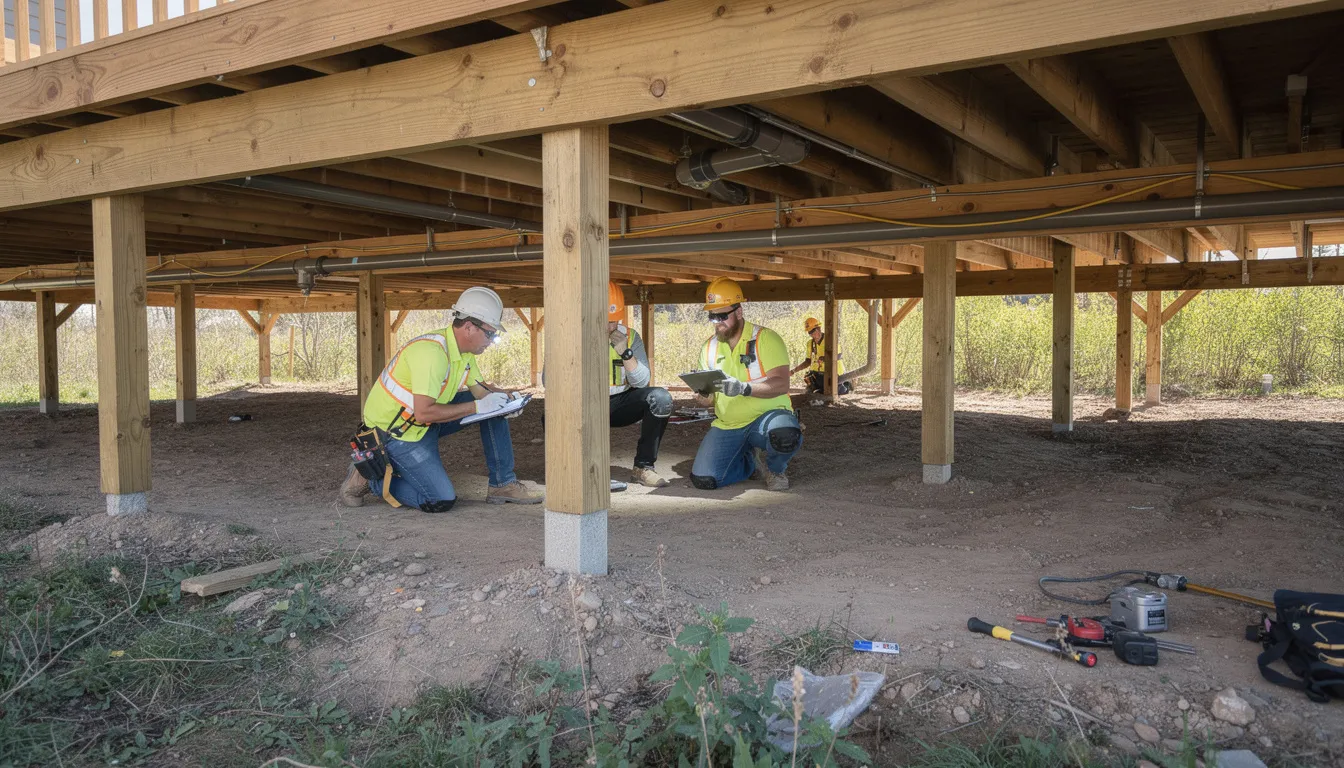
Understanding the entire process helps you plan timing, budget, and living arrangements. Most repiling work for standard Kapiti homes takes 5–10 working days on site, plus additional time for design and consents beforehand.
Initial assessment:
A Kapiti-based foundation specialist visits your property to assess the situation. They’ll check:
- Floor levels across the house
- Cracks in walls and ceilings
- Sticking doors and windows
- Subfloor condition and access
- Existing pile condition and spacing
Laser levelling or digital level surveys are common to map high and low points precisely.
Investigation and design:
- Geotech testing (including Scala penetrometer) where soil conditions are uncertain
- Structural engineer or experienced LBP designs pile layout, bracing, and releveling methodology
- Design must comply with NZS3604 and account for local seismic conditions
Consent and scheduling:
- Submit plans to Kapiti Coast District Council
- Allow several weeks for consent processing (times vary based on council workload)
- Coordinate with occupants on move-out dates if required
- Book in with the contractor’s schedule
On-site works (timber-piled homes):
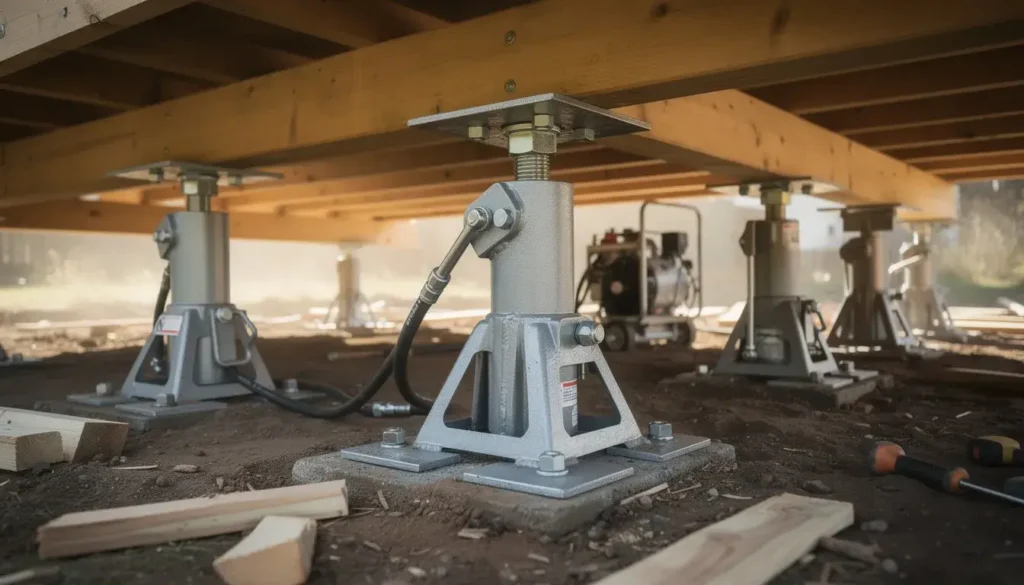
- Set up hydraulic jacks at strategic points
- Carefully lift the house to target levels
- Remove or cut existing piles
- Install new piles or supports to correct depth
- Lower house onto new foundations
- Install new fixings, bracing, and tie-downs
- Fine-tune to achieve target tolerances
On-site works (slab homes):
- Drill injection holes (typically 12–16mm diameter) at calculated points
- Inject engineered resin to fill voids and densify ground
- Monitor lift levels in real-time
- Continue until target levels achieved
- Patch injection holes
Disruption and living arrangements:
Many Kapiti homeowners need temporary accommodation during major repiling—typically 5–7 working days for full repiles. Minor releveling may be done while you remain in the home.
Expect:
- Significant noise during jacking and pile installation
- Dust and debris
- Driveway and outdoor spaces disruption
- Possible service disconnections (water, power)
Inspections and sign-off:
- Kapiti Coast District Council inspections at key stages
- Final sign-off and CCC issued
- Contractor provides warranties, records of work, and any engineering producer statements (PS1/PS4)
Concrete Slab Releveling & Resin Injection On The Kapiti Coast
Many 1980s–2000s brick veneer houses in Kapiti sit on concrete slab foundations. These are particularly common around Paraparaumu Beach, Otaihanga, and parts of Waikanae. When these slabs settle on peat or sandy silt, traditional releveling methods don’t work—you need specialist solutions.
Common slab problems in Kapiti:
- Floor dishing up to several centimetres
- Internal wall cracks radiating from corners
- Misaligned doors and windows
- Gaps opening between walls and floors
- Tile cracking across floor surfaces
These issues often result from poor original compaction, variable fill quality, or ground movement over time.
How resin injection works:
Engineered resins (like Teretek®) can be injected through small 12–16mm holes drilled through the slab. The resin:
- Flows under the slab to fill voids
- Expands to densify the surrounding soil
- Creates lift as pressure builds
- Sets quickly to stabilise the foundation
Lifts of 10–40mm are common, though more may be possible depending on conditions. The process is monitored in real-time with laser levels to achieve precise targets.
Costs for resin injection in Kapiti:
| Scope | Typical Cost |
|---|---|
| Smaller localised jobs (one corner or room) | $8,000–$18,000 |
| Whole-house slab releveling | $25,000–$60,000+ |
| Extensive voiding or settlement | Upper end of range or beyond |
Comparison to traditional underpinning:
Traditional underpinning (excavating and pouring concrete pads or beams) may be required for severe structural failures. It’s typically:
- More disruptive (requires excavation)
- Slower to complete
- Often more expensive
- Necessary where resin injection isn’t suitable
Advantages of resin injection:
- Faster completion (often 1–2 days for standard Kapiti homes)
- Less invasive with minimal excavation
- Occupants can often remain in the home
- Lower disruption to outdoor spaces and landscaping
Limitations:
- Not suitable for every soil type or severity of damage
- Requires specialist assessment and engineering design
- May not work where ground conditions are too unstable
- Won’t fix structural defects in the slab itself
Insurance, EQC & Funding Options For Kapiti Foundation Repairs
Note: This section provides general information only, not financial advice. Every situation is different.
Foundation repairs represent a significant investment, and understanding your funding options helps with planning and avoiding costly mistakes.
When insurance may help:
Standard New Zealand home insurance policies may cover foundation repairs resulting from:
- Earthquakes (Kapiti is in an earthquake prone area)
- Landslips
- Storm-induced erosion
- Burst pipes causing ground saturation
For earthquake-related damage, EQC (Earthquake Commission) may contribute to repair costs up to certain caps, with private insurers covering amounts above that limit.
What’s usually NOT covered:
- Gradual settlement due to long-term soil movement
- Poor drainage causing slow ground deterioration
- Age-related wear and decay
- Pre-existing foundation defects
- Damage from tree roots or vegetation
Most house releveling for settlement issues falls into the “not covered” category, leaving homeowners to self-fund the work.
How to check your coverage:
- Review your policy documents carefully
- Contact your insurer to discuss your specific situation
- Get detailed inspection reports and photos from Kapiti-based professionals
- Have an engineer document the cause and extent of damage
- Keep all quotes and correspondence
Financing options:
- Top up your home loan (discuss with your bank or mortgage broker)
- Use savings or emergency funds
- Stage repair work with priority areas addressed first
- Explore personal loan options if needed
Staging work can help spread costs, though it may increase overall cost due to repeated mobilisation. Discuss staging options with your contractor during the quoting process.
Choosing A Kapiti House Releveling & Repiling Specialist
Poor workmanship on house foundations creates serious structural and legal problems. The construction industry has its share of operators who cut costs in ways that compromise quality work. Careful contractor selection on the Kapiti Coast is critical.

Check qualifications:
- Ensure the company uses Licensed Building Practitioners (LBPs) experienced in foundation work
- Verify they’re familiar with NZS3604 and Kapiti’s specific ground conditions
- Ask to see LBP registration numbers and verify online
Prioritise experience and local knowledge:
Prefer contractors who:
- Regularly work in Kapiti suburbs (Raumati, Waikanae, Otaki, Paekakariki)
- Can discuss local soil challenges knowledgeably
- Understand Kapiti Coast District Council consent processes
- Have relationships with local engineers and geotech professionals
Questions to ask:
- How many similar jobs have you completed in Kapiti in the past 12 months?
- What are your expected timeframes for my property?
- Will we need to move out during the work?
- What’s included in your quote (piles, engineering, council fees, reinstatement of paths/steps)?
- What’s your process if you encounter unexpected issues?
- Who specifically will be on site doing the work?
Get multiple quotes:
Request at least 2–3 detailed quote documents with clear scopes. This lets you compare like-for-like and identify any gaps. Be wary of unusually low prices that may exclude:
- Engineering fees
- Building consent application costs
- Site preparation and reinstatement
- Premium materials or appropriate pile specifications
Check references and reviews:
- Read Google reviews for the business
- Ask for contact details of recent Kapiti clients
- Follow up with references about their experience
- Ask specifically about how unexpected expenses were handled
Confirm insurance and guarantees:
Before signing any contract, verify the contractor:
- Carries appropriate public liability insurance
- Has contract works insurance covering damage during construction
- Provides written warranties for materials and workmanship
- Will provide all required records of work for council sign-off
How To Reduce Your House Releveling Costs On The Kapiti Coast
You can’t change your soil type or house size, but you can manage scope, timing, and preparation to help control costs without compromising on structural quality.
Act on early detection:
Addressing minor unevenness or early cracks can keep repiling work in the $6k–$15k range instead of becoming a $40k–$70k full repile. Signs to watch for:
- Doors starting to stick seasonally
- Hairline cracks appearing at window corners
- Slight bounce in floors
- Minor gaps under skirting boards
Getting an early assessment gives you time to plan ahead and budget appropriately.
Bundle repairs strategically:
If you’re doing releveling anyway, consider combining it with other necessary underfloor work:
- Subfloor insulation upgrades
- Subfloor bracing installation
- Drainage systems improvements
- Earthquake strengthening elements
Bundling saves on repeated access costs and scaffolding mobilisation with our trusted local team.
Prepare your site:
Homeowners can reduce labour time and avoid overpaying by:
- Clearing access around the house perimeter
- Removing stored items from under the house
- Trimming vegetation away from foundation areas
- Arranging clear vehicle access for the crew
- Identifying and marking any underground services
Work with design efficiency:
Collaborate with your engineer and contractor to choose cost effective solution options:
- Appropriate pile types that meet standards without over-engineering
- Efficient pile layouts that minimise count while maintaining structural integrity
- Standard rather than premium materials where they’ll perform adequately
Invest in good drainage:
Before and after releveling, ensure your property has adequate drainage:
- Clean and extend gutters and downpipes
- Grade soil away from foundations
- Address any ponding areas
- Consider subsoil drains if water table is high
Good drainage protects your releveling investment and prevents future ground movement.
Set aside contingency:
Plan for a 10–20% contingency budget for unexpected findings once work starts. Common discoveries include:
- Rotten bearers or joists needing replacement
- Undocumented concrete paths or retaining walls in the way
- Hidden drainage systems requiring relocation
- More extensive pile decay than visible from inspection
Being prepared for these hidden costs prevents stressful mid-project budget crises.
FAQs: House Releveling Cost Kapiti
How do I know if my Kapiti house needs releveling?
Key signs include sloping or bouncy floors, doors and windows that stick or won’t close properly, gaps appearing under skirting boards, cracks radiating from window and door corners, and visible lean in decks or verandas. Many variables affect how these symptoms present, so a local foundation specialist can confirm using laser level checks and subfloor inspection. Early assessment often reveals issues can be addressed with less extensive (and less expensive) work than many homeowners fear.
Can I stay in my Kapiti home while it is being relevelled?
For minor timber-pile adjustments—packing a few piles or replacing a small number—some homeowners can stay in the house. However, for full repiling or extensive slab lifting, it’s usually safer and more practical to arrange temporary accommodation for 5–7 working days. The contractor’s method, your house layout, and the floor height changes required all determine whether you can remain. Discuss this explicitly when getting quotes so you can plan ahead for alternative arrangements and factor any temporary accommodation costs into your budget.
How long does it take from first inspection to finished releveling in Kapiti?
A typical timeline looks like this: 1–2 weeks to organise inspections and get multiple quotes, several weeks for engineering design and Kapiti Coast District Council consent processing, then 1–2 weeks on site for most standard jobs. Larger or more complex homes take longer on site. The consent stage often creates the biggest delays, particularly during busy periods. From first phone call to completion, budget 2–4 months for a straightforward job and longer for complex situations requiring extensive engineering or increased demand at council.
Will releveling fix all my interior cracks and sticking doors permanently?
Releveling addresses the underlying foundation movement and should stabilise your house, stopping further differential settlement. However, existing interior damage (cracked plasterboard, misaligned door frames, cracked tiles) typically needs separate repair or adjustment after the foundation work is complete. Also note that if the causes of initial settlement aren’t addressed—poor drainage, tree roots, ongoing soil consolidation—new issues could develop over time. A thorough job includes fixing the cause, not just the symptoms.
Is house releveling tax-deductible for Kapiti rental properties?
Tax treatment depends on whether the work is classified as repairs and maintenance (potentially deductible) or capital improvement (depreciated over time) under New Zealand tax rules. The distinction often comes down to whether you’re restoring the property to its original condition or improving it beyond that. Given this is a crucial topic with significant financial implications, landlords in Kapiti should discuss their specific situation with their accountant or tax adviser before assuming any deductions apply.
Why is foundation leveling essential for my home?
Foundation leveling is crucial for ensuring the safety, longevity, and market value of your home. It helps maintain structural integrity, prevents costly damage such as cracked walls and uneven floors, and supports your property’s resale value.
What is the first step in the foundation leveling process?
A thorough assessment by a qualified foundation specialist or structural engineer is the first step. This detailed report helps identify the extent of foundation issues and guides the design of an effective repair plan. For ongoing tips and updates on building and repairs, consider subscribing to the Builders Kapiti Newsletter.
How soon should I address foundation issues?
Early intervention is highly recommended. Detecting and repairing small cracks or uneven floors before they escalate can save thousands of dollars in repair costs and prevent further structural damage.
How long does the foundation leveling process take?
The process can take anywhere from a few days to several weeks, depending on the complexity of the job, foundation type, and extent of repairs needed.
Can I get a free inspection for foundation issues in Kapiti?
Yes, Wellington House Repiling offers free inspections and no-obligation quotes for foundation services to homeowners in Kapiti, helping you understand the work involved and estimated cost.
Who operates Wellington House Repiling?
Wellington House Repiling is locally owned and operated by Stephen Pihama, a Licensed Building Practitioner with extensive experience in house foundations and compliance with New Zealand building standards.
What do customers say about Wellington House Repiling?
Customers consistently praise Wellington House Repiling for their professionalism, quality work, and respectful approach to property care during the entire process.
What foundation repair solutions are available for concrete slab homes?
Mainmark provides a cost-effective solution using their proprietary Teretek resin injection. This minimally invasive method fills voids, strengthens the ground, and lifts load-bearing structures, allowing homeowners to stay in their homes during repairs.
How does soil type affect foundation repair costs?
Soil conditions play a major role in costs. Rocky ground increases excavation time and material costs, while soft or unstable soils may require deeper piles or ground improvement, impacting the overall price.
What are typical costs for different foundation types?
- Timber piles: Approximately $150–$250 per meter, generally the most affordable option.
- Concrete piles: Typically range from $250 to $400 per meter.
- Minor leveling jobs (e.g., adjusting uneven floors): Usually cost between $2,500 and $7,000.
- Major repiling or full foundation replacement: Can range from $20,000 to over $50,000.
How much does house releveling cost in Kapiti?
In the Greater Wellington/Kapiti area, costs vary widely—from a few thousand dollars for minor fixes up to $50,000 or more for major repiling or slab repairs. For 2026, typical releveling costs range between $5,000 and $30,000, with full repiling often costing $20,000 to $50,000.
How can I get an accurate estimate for my foundation repair?
Homeowners should seek a professional inspection and a detailed quote from a licensed builder experienced in local conditions. Obtaining multiple quotes helps avoid unexpected expenses and ensures informed decisions.
Are foundation repairs compliant with New Zealand building codes?
Yes, reputable providers like Wellington House Repiling are Licensed Building Practitioners, ensuring all work complies with NZ building standards and council regulations, including necessary consents and code compliance certificates.
Can foundation repairs be done without moving out?
Some foundation repairs, especially those using minimally invasive methods like resin injection by Mainmark, allow homeowners to remain in their homes. However, extensive repiling may require temporary accommodation during the work.
How do I choose the right foundation repair specialist in Kapiti?
Look for licensed builders with local experience, positive customer reviews, and transparent, detailed quotes. Confirm they handle council consents and provide warranties and records of work to protect your investment.
Conclusion
Understanding the house releveling cost in Kapiti is essential for homeowners facing foundation issues. Costs can vary widely depending on key factors such as foundation type, soil conditions, extent of damage, and site accessibility. Whether your home sits on timber piles or a concrete slab, early detection and timely repairs can save you thousands of dollars in unexpected expenses and protect your property’s structural integrity and market value.
Choosing experienced, licensed professionals who provide detailed quotes and navigate local council regulations ensures quality work and compliance with building codes. Additionally, planning ahead for council consents, engineering reports, and potential contingencies helps avoid legal headaches and budget surprises.
With the right knowledge and expert support, you can confidently manage the house releveling process in Kapiti, restore your home to solid ground, and maintain its energy efficiency, safety, and resale value for years to come.